
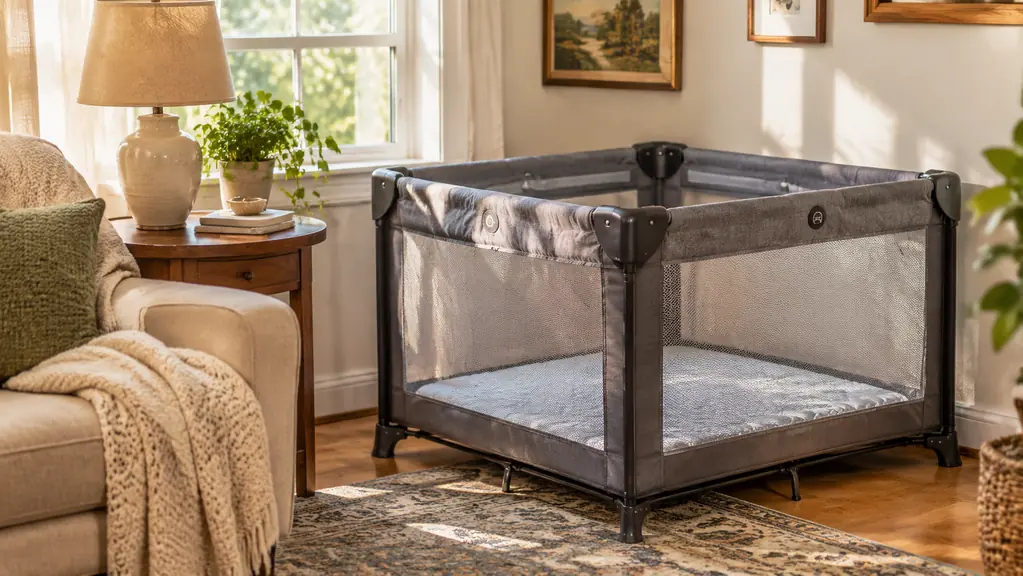
The first Monday my daughter went back to work, I had a playard sitting in my living room in three pieces and a baby arriving in forty minutes. I got it together with about ten minutes to spare, which tells you most of what you need to know about setup. What I have learned since, over a few months of three-day-a-week use, is that the Dream On Me Zodiak Portable Playard is not the fanciest thing I could have bought for my house. It is the one I stopped thinking about, and for baby gear that is the highest compliment I can pay.
This is a review of that playard after months of real weekday use, not a first-impression post. I am 62, I raised two children in the 1990s, and I am now the weekday sitter for my grandson Theo, who was born in early spring. Some of what I knew then has been replaced by better guidance, and some of the gear has genuinely gotten easier to live with. I will tell you which parts of this playard earned their place in my hall closet and which parts I would change.
The Quick Verdict
A 16.6-pound playard that folds into its own bag, goes up in a couple of minutes, and takes up less floor than a coffee table. The mattress pad is thin and the sides are low, but as a second set of gear at a grandparent's house it does the job without fuss.
Amazon Check Today's Price →The playard that lives in my hall closet and goes up before Theo stops fussing
Folds to 14 by 25.5 inches, weighs 16.6 pounds, and comes with its own carry bag. Rated to 30 pounds or 35 inches, which covers us for a long while yet.
Amazon Check Today's Price on Amazon →How I've Used It
Jenna and Marcus live twenty-five minutes away, and Jenna works three days a week, so Theo is at my house Monday through Wednesday. I keep a crib in the back bedroom, a high chair at the kitchen table, and this playard wherever I happen to be standing. In the morning it goes up in the living room while I make coffee and unload the dishwasher. In the afternoon it moves to the back porch, in the shade, while I water the garden.
Before the playard arrived, I did what my own mother would have done. I spread a quilt on the living room floor and set him down on it, and for about two weeks that seemed perfectly fine. Then one afternoon I turned my back to move the sprinkler off the porch steps, and when I came in he had scooted nearly three feet from where I left him and was working his way toward the bookcase. A quilt is not a boundary. Nothing about that afternoon was dramatic, and that is exactly why it stayed with me. I ordered the playard that week.
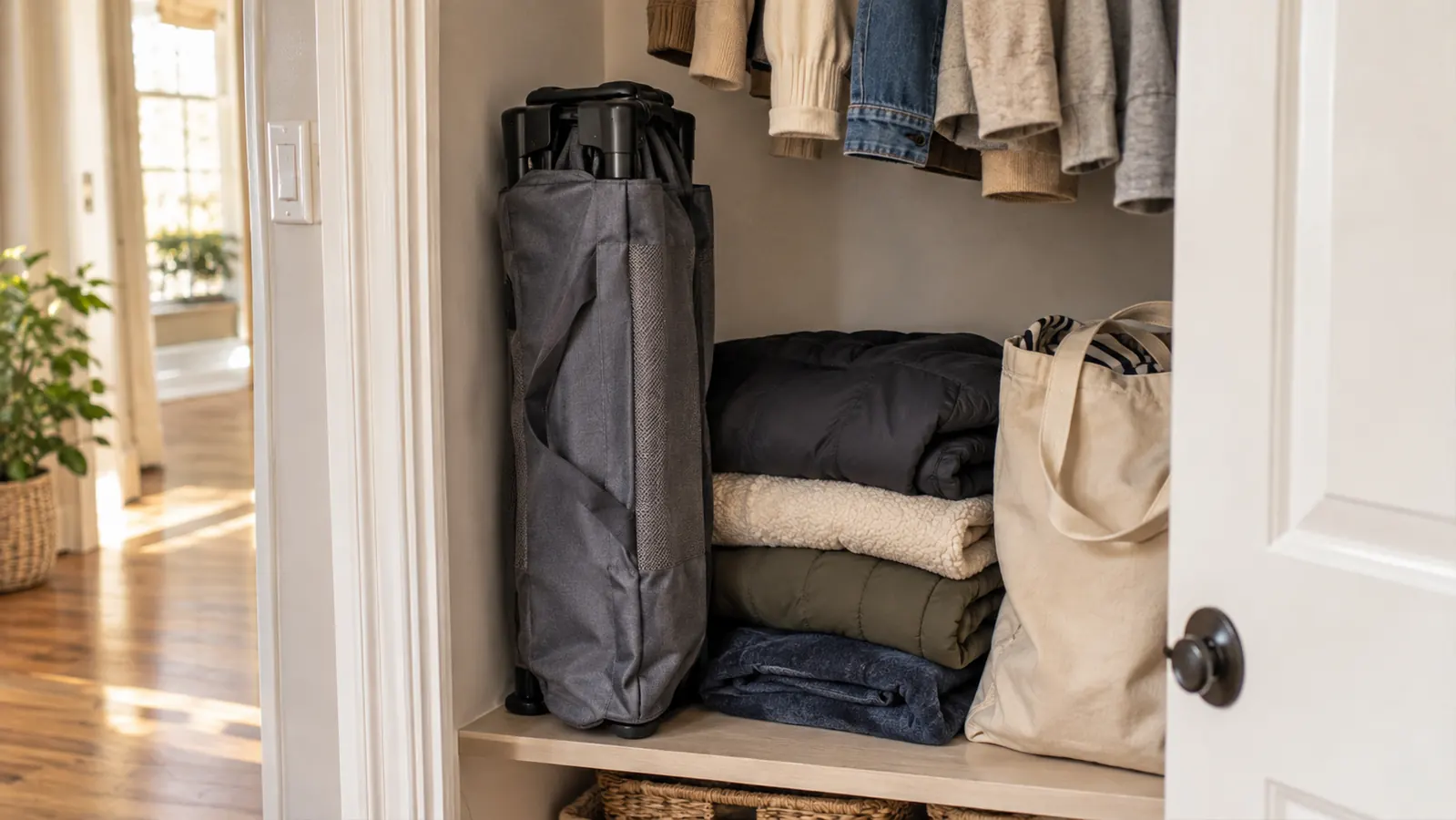
It has been in the car a handful of times. Once to my sister's for a Sunday, once to a picnic at the park where the ground was too hot to put him down. The carry bag lives on the shelf above the coats, and this is the only piece of baby gear I own with a permanent home rather than a corner it gets shoved into.
The comparison to the playard I had in 1994 is not flattering to 1994. That one weighed close to thirty pounds, had a rigid frame that pinched my fingers every single time, and took up the whole trunk. This one is 16.6 pounds and folds into a bag I can carry on one shoulder. I am usually skeptical when people say gear has improved, but it has.
Theo was a few months old when I started using it. He is bigger now and far more interested in escaping. He is nowhere near the limits. The playard is rated to 30 pounds or 35 inches, or whenever a child begins attempting to climb out, whichever comes first. He is well under both, so I expect to get years out of this, which is more than I can say for the bouncy seat he has already outgrown.
Setup, Fold-Down, and the Bag
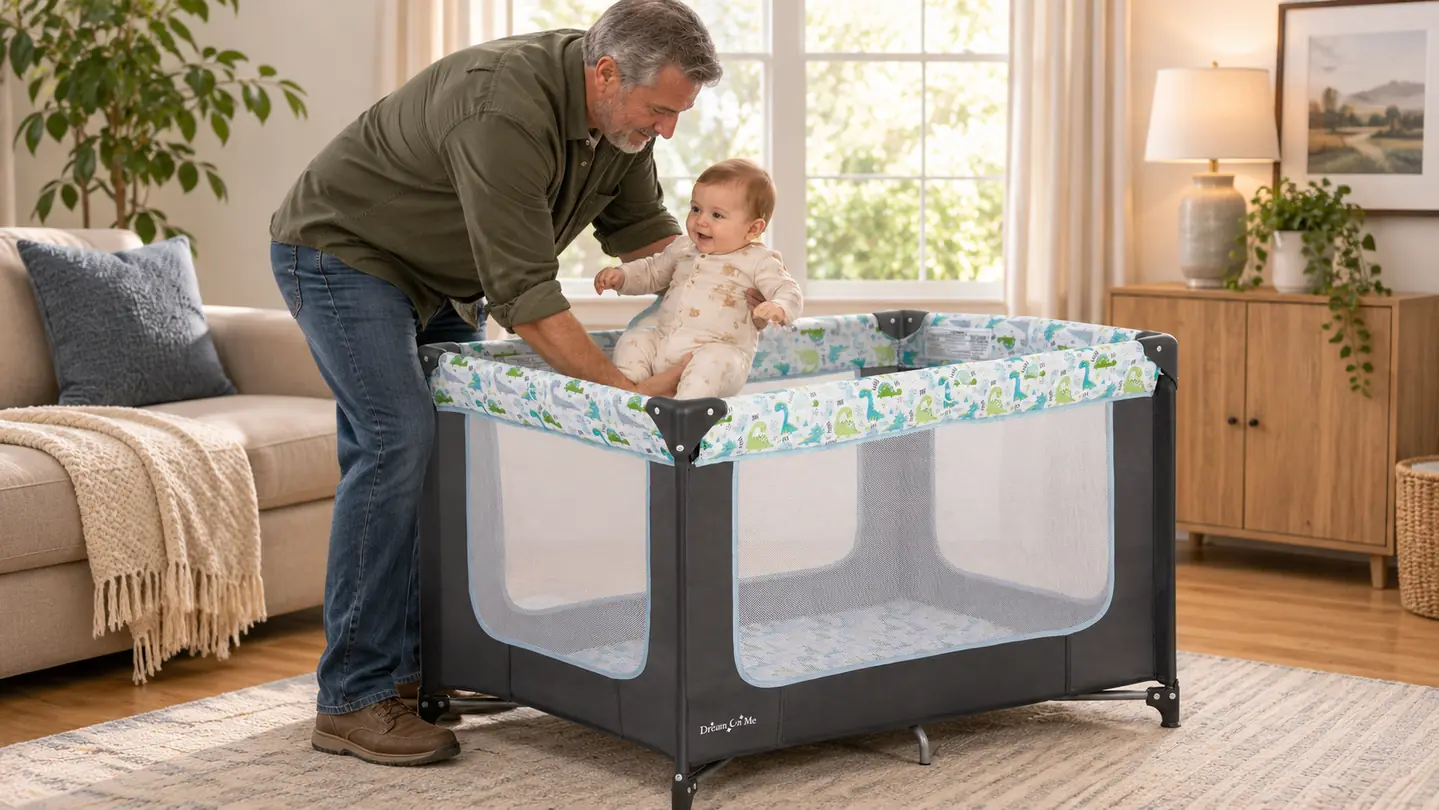
The first setup took me longer than it should have because I did not read the sheet. The second time, out of curiosity, I timed myself. One minute and forty seconds. The order is what matters. You pull the sides out until they lock, then press each corner down until you feel it seat, then lay the pad in. If you try to drop the pad in before the corners are seated you will fight it, which is precisely what I did that first Monday with a baby due in forty minutes. Once you know the order, it is a two-minute job, and taking it down is the reverse with a firm push down in the middle. My hands know it now, and I can do it while holding a baby on my hip, though I would not recommend that as a habit.
Folded, it measures 14 by 25.5 inches, roughly the footprint of a large suitcase standing on end. It slides into the carry bag and the bag goes on the closet shelf. The bag is a snug fit, and I will admit to a small wrestle with the zipper the first few times. Either it has loosened up or I have gotten better at it. Of everything in this house that gets put away and taken back out, the Dream On Me Zodiak is the only thing that has never once made me sigh when I saw it coming.
At 16.6 pounds it is light enough that I carry it from the living room to the porch one-handed by the rail. My daughter can lift it into the back of the CR-V without asking Marcus for help, which matters more than the spec sheet makes it sound.
Living With the Size: 40 by 27.5 by 25.5 Inches
Set up, it is 40 by 27.5 by 25.5 inches. That is smaller than I expected, and it is the reason the playard has stayed in the living room instead of being banished to the back bedroom. It fits between my sofa and the bookcase with room to walk past. It fits on the porch without blocking the door.
I measured that gap before I bought it, because I have been burned before by a chair that almost fit and ended up living sideways in a hallway for six years. The opening between the sofa arm and the bookcase is thirty-one inches. With 27.5 inches of depth, the playard slid in with three and a half inches of air behind it, which is the difference between a piece of gear that stays out and a piece of gear that goes back in the closet. On the porch it sits between the screen door and the rocking chair and I can still get past it carrying a watering can.
The 25.5-inch height is the number I think about most, because it is the number my back thinks about. This is a floor-level playard. When Theo is down in it, I am bending to reach him, and at my age with a hip that has opinions, that is a real consideration three times a day. The playard I had in the 1990s was deeper and heavier and I never thought about it at all, because I was thirty and nothing hurt.
What the lower height buys you is safety in the other direction. Because the sides are low, I can stand at the kitchen sink and still see him over the top. He cannot get himself into a position I cannot see. That trade, easier for my back versus easier for my eyes, is the biggest decision with this playard, and I came down on the side of my eyes.
The Mattress Pad, the Fabric, and the Sleep Question
It comes with a removable mattress pad about an inch thick. One inch is not a lot. It is enough that the floor of the playard is not the floor of my house, and not enough that I would call it cushioned. I put Theo down on it for naps, on his back, alone, with nothing else in there. No quilt, no pillow, no folded blanket underneath. That is the guidance now and it is different from what a lot of us did in the 1990s. The pad stays bare.
The pad lifts out, which matters more than I expected. Theo has had two diaper situations in this thing and both times I pulled the pad out, wiped the polyester underneath with a damp cloth, and had it back together before he finished complaining. The fabric does not hold a stain the way the quilted pad on my old playard did.
If you are looking at this for a brand new baby, know what it is not. There is no raised newborn level. A very small baby is down at the bottom of the playard, which means more bending for whoever is lifting him. That did not matter for us, because Theo was already a few months old and holding his head well when I bought it. If I were setting up for a newborn, I would think harder about that one detail before deciding.
How It Held Up Over Months
We started this routine in the spring and it ran straight through the summer, three days a week. That is not the same as a year of daily use, but it is enough to find the weak spots. The corners still seat with a solid click. The fabric has not torn anywhere, including at the seams where Theo kicks. The one thing that has loosened is the carry bag zipper, which now goes around easily, and I count that as improvement rather than wear.
Once a month I flip the whole thing over and look at the stitching along the floor seams, the way I check the hem on anything that gets washed a lot. By the end of August those seams still looked like the day it came out of the box. There is a scuff on one leg from the porch tile where I drag it rather than lift it, and that is my fault, not the playard's. I have never found a loose thread, a bent corner, or a place where the fabric pulled away from the frame.
The pad has flattened slightly in the middle where he sits most. It is not a hole and it is not uncomfortable, but it is no longer flat. I would expect to replace the pad before I replace the playard.
I have put it up and taken it down well over a hundred times. The folding action has not gotten stiff or sloppy. If it ever fails, it will fail at a corner, and I will come back and update this if that happens.
Where It Falls Short
The thin pad is the honest complaint. If your baby naps in a playard every single day, you will notice it, and there is not much you can do about it, because the safe answer is a bare surface and not a stack of blankets. If cushioned naps are the priority, this is not the playard that solves it for you.
The height is the second. Twenty-five and a half inches is low. That is fine when you are thirty. It is a different calculation at my age, and I would rather say so plainly than pretend it does not matter. There are no wheels on it, so moving it means lifting and carrying, and the bag is snug enough that packing it away takes an extra minute at the end of the day.
I will also say this plainly: it is a playard, not a crib. It is fine for naps and for a safe place to set a baby down while you load the dishwasher or answer the door. If you want something that lives in a nursery permanently, spend your money there. I bought this for a second location, and it is exactly right for that job.
What I Liked
- 16.6 pounds and folds to 14 by 25.5 inches, so it stores on a closet shelf
- Up or down in about two minutes once you know the order
- Removable one-inch mattress pad wipes clean and lifts out fast
- Rated to 30 pounds or 35 inches, so it lasts well past the first year
- Low sides let me keep him in view from the kitchen
- Carry bag included, which is why it has traveled to two family gatherings
Where It Falls Short
- The one-inch pad is thin and flattens in the middle over time
- No raised newborn level, so a very small baby sits down at the bottom
- 25.5 inches high means deep bending for an older back
- No wheels, so moving it means lifting the whole thing
- The carry bag is a snug fit and takes a minute to zip
I have put it up and taken it down well over a hundred times, and the corners still seat with the same solid click they did back in the spring.
Who This Is For
This is for the grandparent, the sitter, or the parent who needs a second safe spot and does not have a second nursery. If the playard has to fold up and disappear into a closet between visits, this is the one I would point you toward. It weighs 16.6 pounds, it folds smaller than a suitcase, and it goes up fast enough that you will actually use it rather than leave it collapsed in the garage.
It is also for anyone with a small house or a small car. Forty by 27.5 inches set up is genuinely compact, and it has lived in my living room for months without me resenting it. If you are setting up a second base of operations so a baby can be somewhere other than a car seat while you make dinner, the Dream On Me Zodiak fits that job almost exactly.
Who Should Skip It
Skip it if you are setting up for a newborn and want a raised level so you are not lifting a brand new baby off the floor forty times a day. Look for a playard with a newborn insert instead. Skip it if your back is already giving you trouble, or if you plan to move the playard between rooms several times a day, because there are no wheels here and you will be lifting it.
And skip it if you want one piece of gear that does everything in the nursery from day one. This is a simple, light, portable playard. It is very good at that. It is not trying to be anything else, and for the money I think that is the right call, but you should know it going in.
The second set of gear that earns its closet shelf
Weighs 16.6 pounds, folds to 14 by 25.5 inches, and comes with a carry bag. Months of weekday use later, the corners still seat the way they did on day one.
Amazon Check Today's Price on Amazon →